1521Magellan reaches the Philippines
Ferdinand Magellan reached the Philippine archipelago and claimed the islands for Spain. His expedition paved the way for later attempts to establish a route to Asia.

History’s first global trade route connected Asia, the Americas and Europe for 250 years in an extraordinary exchange.

Destination 04. Pacific Ocean
In 1565, the Augustinian friar Andrés de Urdaneta solved one of the greatest challenges of Spanish navigation in the Pacific: finding a safe return route from the Philippines to New Spain. Until then, ships leaving Manila had failed to return, held back by adverse currents and unfavourable winds. Drawing on extensive seafaring experience and navigational knowledge, Urdaneta proposed an alternative route: sail north, away from the tropics, until reaching the Kuroshio Current near Japan, which eventually carried him to the shores of the Americas.
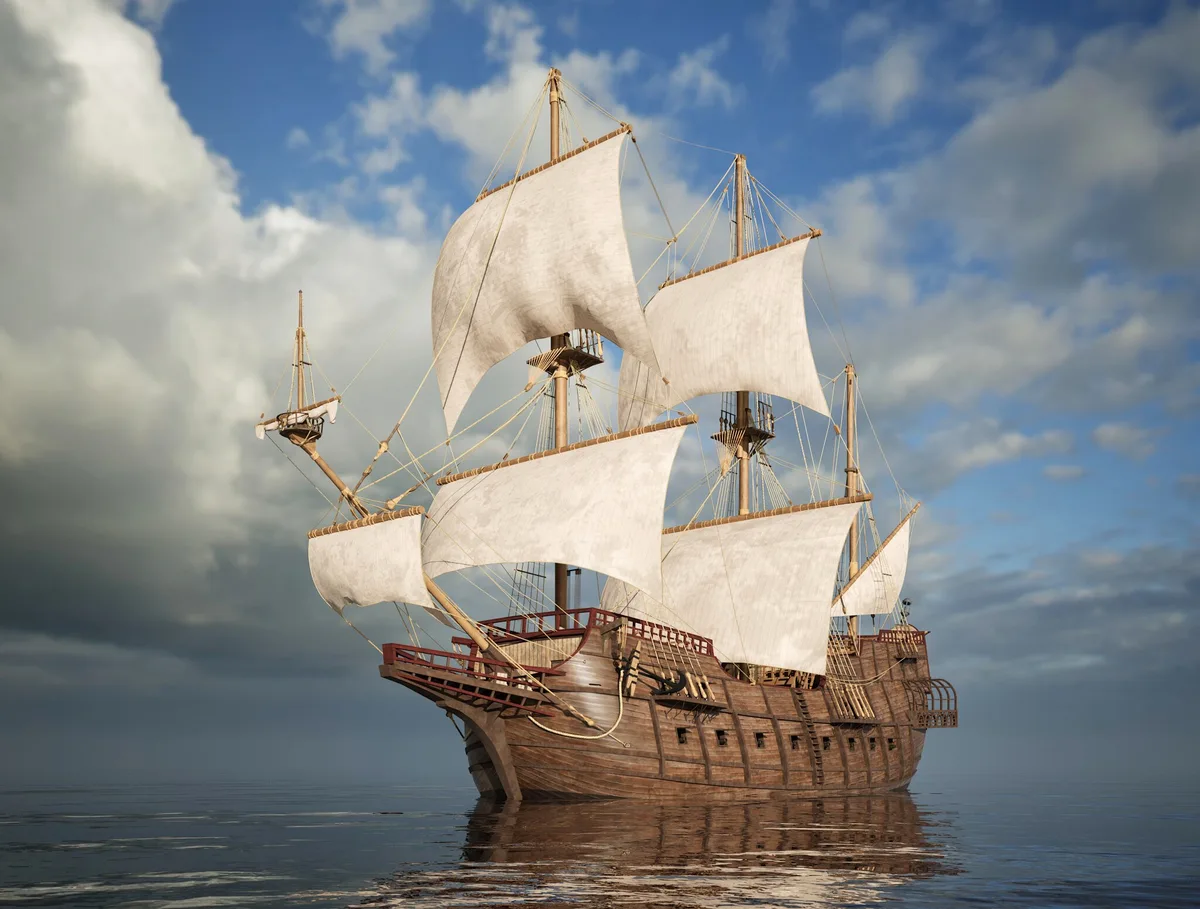
This discovery established the Tornaviaje, the Manila Galleon’s return route. It sustained a flourishing trade between Asia and the Americas for more than 250 years. The voyage from Manila to Acapulco, in present-day Mexico, took four to six months, although adverse conditions could extend it to eight or nine.
The Tornaviaje was a feat of endurance and nautical knowledge, essential to sustaining the longest and most enduring transoceanic trade route of the early modern era.
Destination 04. Pacific Ocean
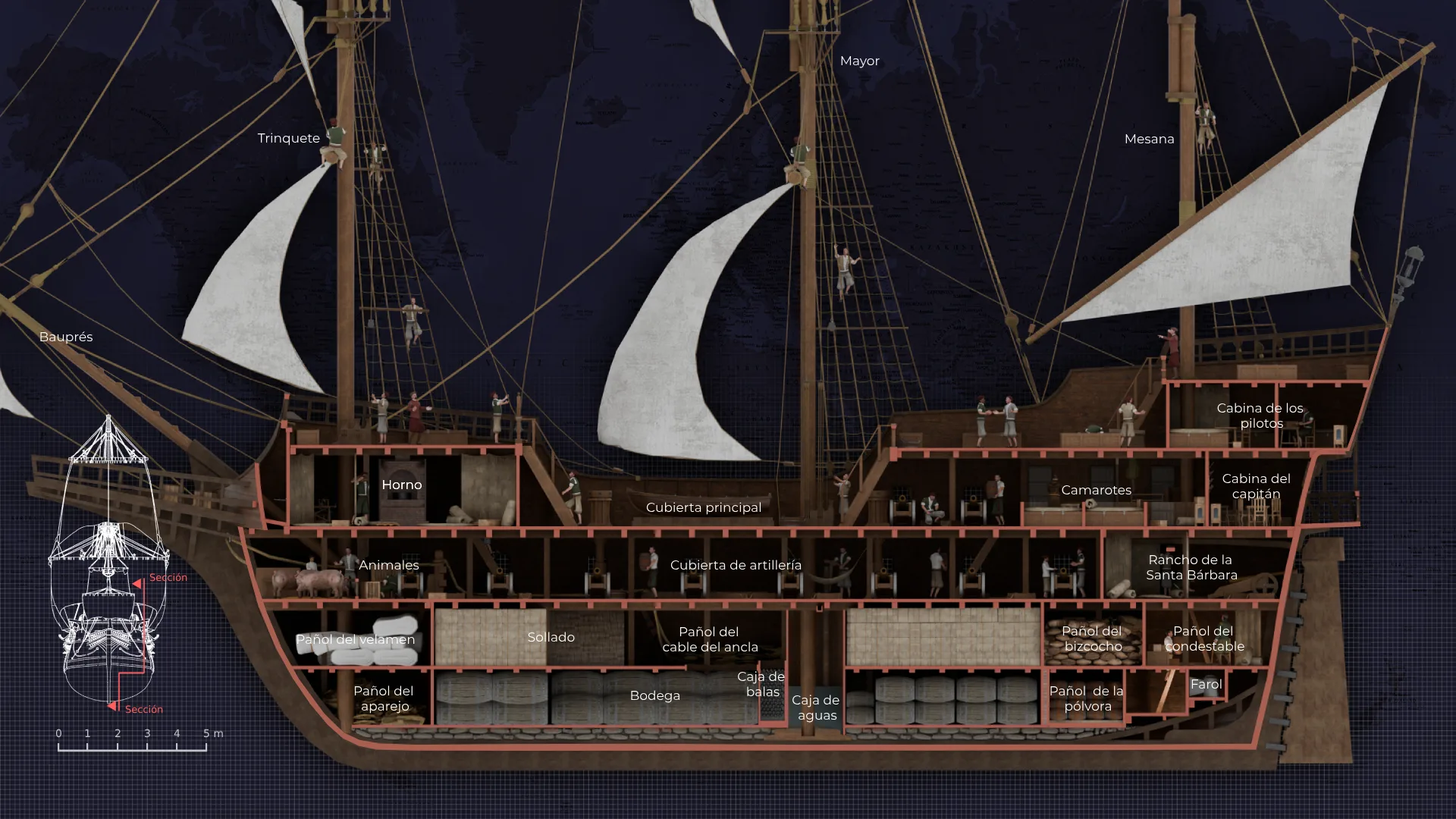
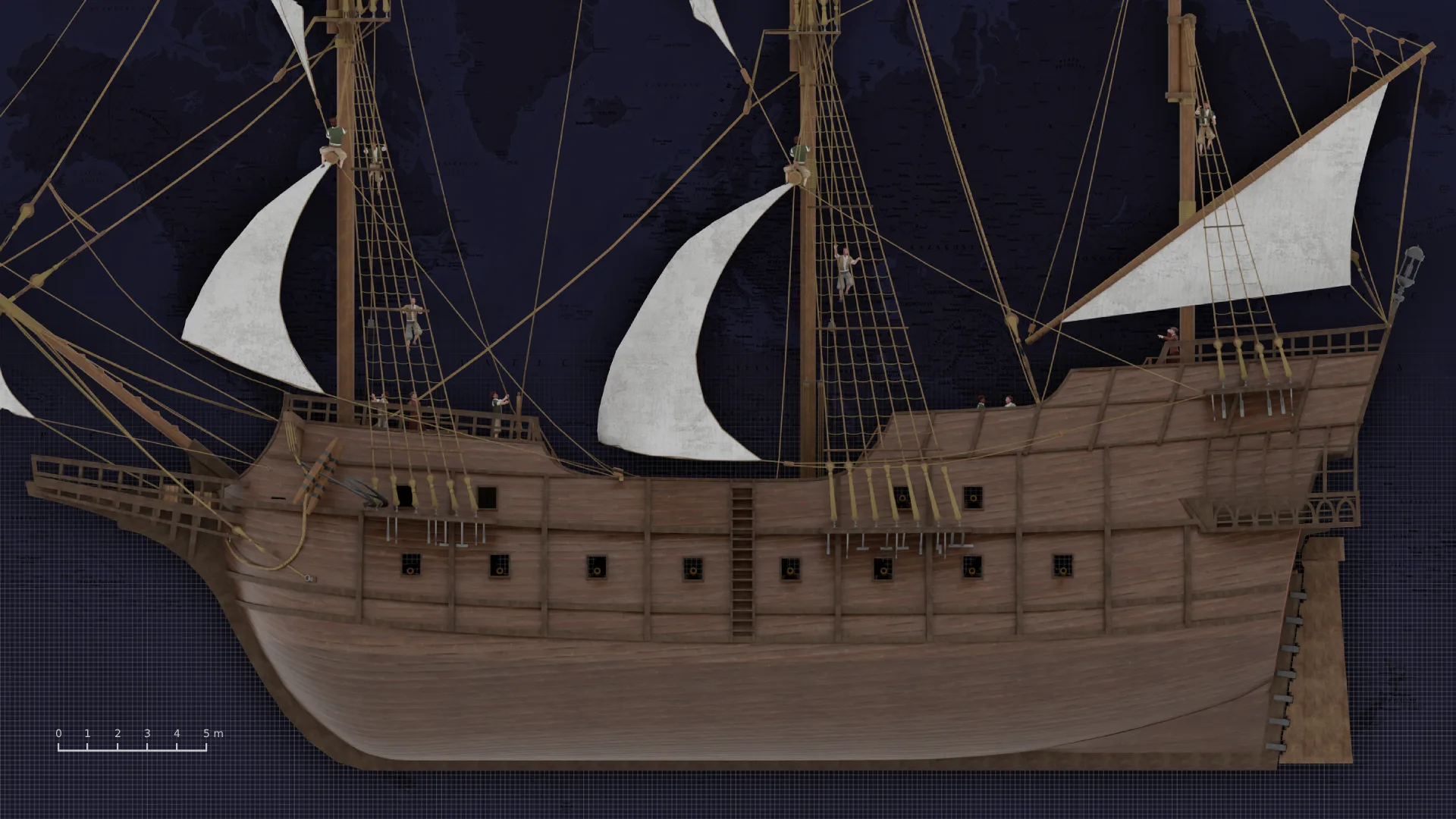
For more than two and a half centuries, the Manila Galleon route lay at the heart of a vast exchange between Asia, the Americas and Europe, marking the beginnings of globalisation. Each year, a single ship sailed from Manila to Acapulco laden with valuable goods: Chinese porcelain, silk, spices, ivory and other products prized in European markets. On its return, it carried American silver, in high demand in Asia as a means of exchange.
The voyage was long and demanding. Crossing the Pacific meant months at sea, facing storms, disease and vast stretches without sight of land. Yet this regular connection between distant continents enabled more than trade: it brought cultures, religions, ideas and knowledge into contact.
More than a shipping route, the Manila Galleon was an early global network that transformed the economy and outlook of its time. Its legacy endures as one of the most remarkable and lasting chapters in the history of early modern transoceanic trade.
Destination 04. Pacific Ocean
Scroll through the timeline to explore the Manila Galleon’s key milestones, from Magellan to its final voyage in 1815.
Ferdinand Magellan reached the Philippine archipelago and claimed the islands for Spain. His expedition paved the way for later attempts to establish a route to Asia.
Miguel López de Legazpi sailed from New Spain on an expedition to establish a Spanish presence in Asia. The voyage included a stop in Guam.
Andrés de Urdaneta found the return route from the Philippines to New Spain, sailing north to catch the westerlies and reach Acapulco.
Galleons began making regular Pacific crossings between Manila and Acapulco. For centuries, the route carried goods and silver and connected cultures across Asia and the Americas.
English privateer Thomas Cavendish seized the galleon Santa Ana at Cabo San Lucas. It was one of only a few ships captured during the route’s more than 250 years.
To regulate the highly profitable trade, a law capped departures at two ships a year: one would remain in Manila and the other in reserve at Acapulco.
The galleon sank in Manila Bay after a battle with Olivier van Noort’s Dutch fleet, one of the route’s first major naval clashes.
La Concepción was wrecked on a trans-Pacific voyage. At around 2,000 tons, the ship reflected both the scale and the risks of these long crossings.
The galleon was captured by the English and sold in Macao. Its seizure showed the threat rival powers posed to trans-Pacific trade.
The English captured the galleon during the occupation of Manila and took it to Portsmouth, dealing another blow to Spanish trade and interests in Asia.
The long voyages wore ships down and prompted the search for support ports along the California coast. By the late 18th century, some galleons were stopping at Monterey.
The galleon Fernando de Magallanes carried part of the Royal Philanthropic Vaccine Expedition, which brought the smallpox vaccine to the Philippines.
Mexico’s War of Independence halted the route. The San Fernando was the last galleon to sail from Acapulco to Manila; an attempt to restart the service failed.
Destination 04. Pacific Ocean
The app also includes detailed models of objects associated with the Manila Galleon.
You can even place them in your own living room with augmented reality!
Explore the Spanish Pacific and discover its history through augmented reality.