1521Magellan reaches the Philippines
Ferdinand Magellan’s expedition made the first documented European contact with the Philippines. Magellan died later that year at the Battle of Mactan.

Manila’s walled city, a meeting place for Asia, the Americas and Europe.

Destination 03. Philippine Islands
Near the shores of mainland Asia lies an archipelago that was a vital part of the Spanish Crown for over 300 years.
The Philippine Islands take their name from King Philip II of Spain. After joining the empire in 1565, they became a gateway to Asian trade and a link between two of the greatest powers of the time: China and Spain.
Precious metals, fabrics and spices passed through the port of Manila, alongside thousands of people who brought their languages and cultures with them. The effects of this exchange can still be felt across the archipelago today.
Throughout the islands, many towns retain a rich material heritage, sometimes weathered by time, that tells the story of this shared legacy.
Immersive technology now allows us to travel back in time and rediscover it in its heyday.
Destination 03. Philippine Islands
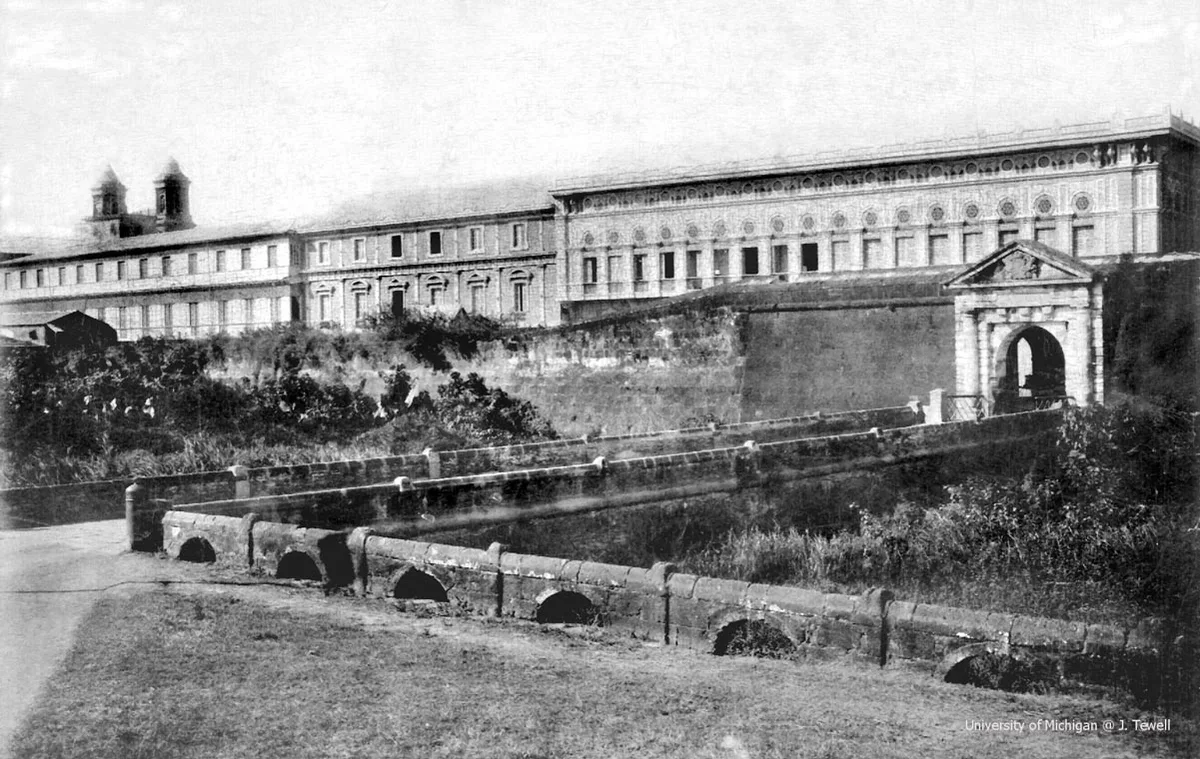
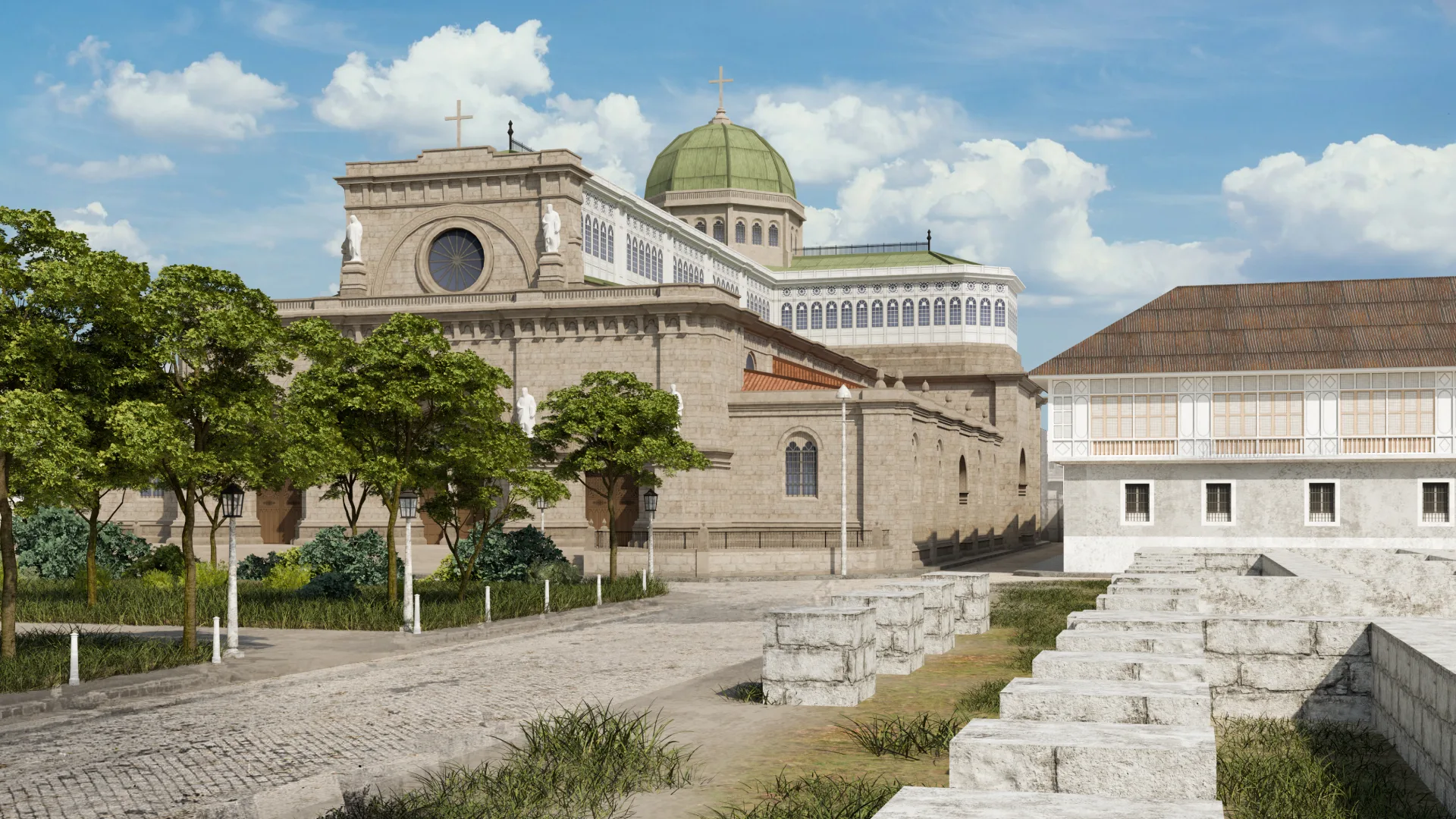
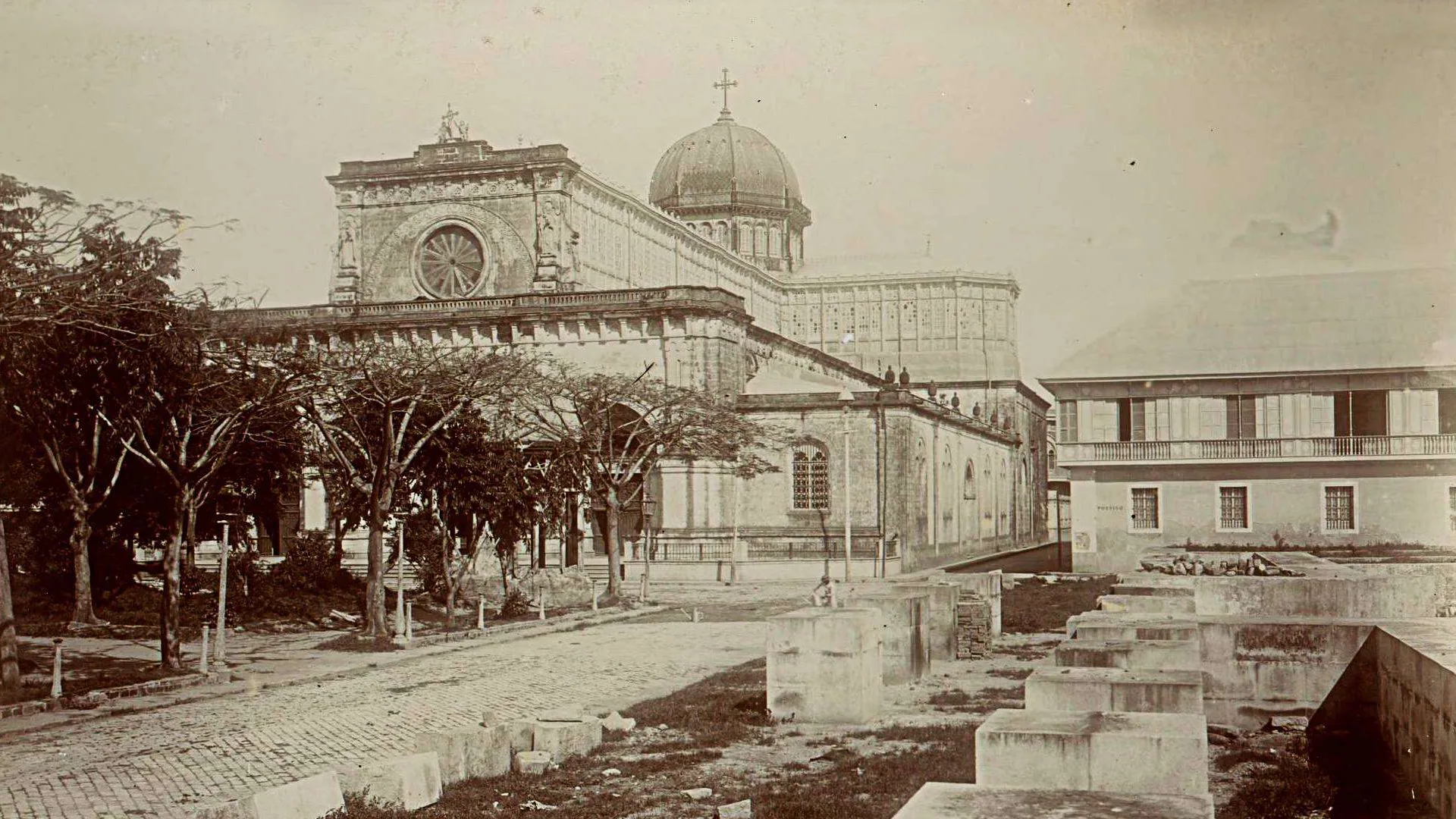
Founded in 1571 by Miguel López de Legazpi, Intramuros was the political, religious and cultural centre of colonial Manila. Laid out on a Renaissance plan, the walled city was protected by more than three kilometres of walls, moats and seven gates. Within stood key institutions of the Spanish Empire: the Governor’s Palace, the Royal Audiencia, the University of Santo Tomás and seven churches, including Manila Cathedral and San Ignacio Church. Daily life in Intramuros was deeply shaped by the religious influence of Dominican, Augustinian and Jesuit convents.
As well as a centre of government and faith, Intramuros played a crucial role in global trade as the departure point for the Manila Galleon. The ship connected Asia and the Americas, carrying silks, spices and porcelain, and bringing back silver, books and news from across the ocean.
In 1945, during the Second World War, Intramuros was almost entirely destroyed in the crossfire between Japanese and US forces. Today, its ruins and reconstructed buildings remain a reminder of its historic legacy.
Destination 03. Philippine Islands
Scroll through the timeline to explore the key milestones, from Magellan’s arrival to the Spanish–American War.
Ferdinand Magellan’s expedition made the first documented European contact with the Philippines. Magellan died later that year at the Battle of Mactan.
Miguel López de Legazpi sailed from Barra de Navidad with Andrés de Urdaneta on an expedition to establish a Spanish presence in Asia.
Legazpi’s fleet reached Cebu. After clashes with the local population, the Spaniards established their first permanent settlement in the archipelago.
Sent by Legazpi, Martín de Goiti captured Maynila on the island of Luzon, paving the way for the colonial government to move its centre there.
Legazpi arrived in Maynila, renamed it New Castile and declared it the capital of the Philippines. Intramuros developed as the city’s political and administrative centre.
Chinese pirate Limahong attacked and besieged Manila. Defending the walled city became a priority for the Spanish authorities.
Two galleons and a galley, crewed by Spanish and Filipino volunteers, defeated a much larger Dutch fleet. The defeat ended Dutch plans to invade the Philippines.
During the Seven Years’ War, British forces captured Manila. Simón de Anda organized Spanish and Filipino resistance outside the city.
After the Treaty of Paris, the British returned Manila to Spain. Their occupation had never extended to the rest of the archipelago.
Mexico’s independence ended the Philippines’ administration from the viceroyalty. Spain began governing the islands directly from Madrid.
Spain opened Philippine ports to world trade. Manila transformed and grew as a centre for business and exchange with other countries.
After the mutiny, priests Gómez, Burgos and Zamora were executed. Their deaths strengthened reform movements and Filipino nationalism.
Andrés Bonifacio and other activists founded this secret organization to separate the Philippines from the Spanish Empire.
The Katipunan launched the revolution against Spanish rule. José Rizal, whose ideas inspired many reformers, was executed on December 30.
Spain’s naval defeat in Manila Bay was followed by the capture of the city in August. The Treaty of Paris, signed in December, ceded the Philippines to the United States.
Destination 03. Philippine Islands
Manila Cathedral is part of the heritage of Intramuros. Explore its architecture in this 3D model and discover the reconstruction of the city.
Continue the experience in the Project Legado app and discover its heritage through augmented reality.
Explore the Spanish Pacific and discover its history through augmented reality.